
Introduction
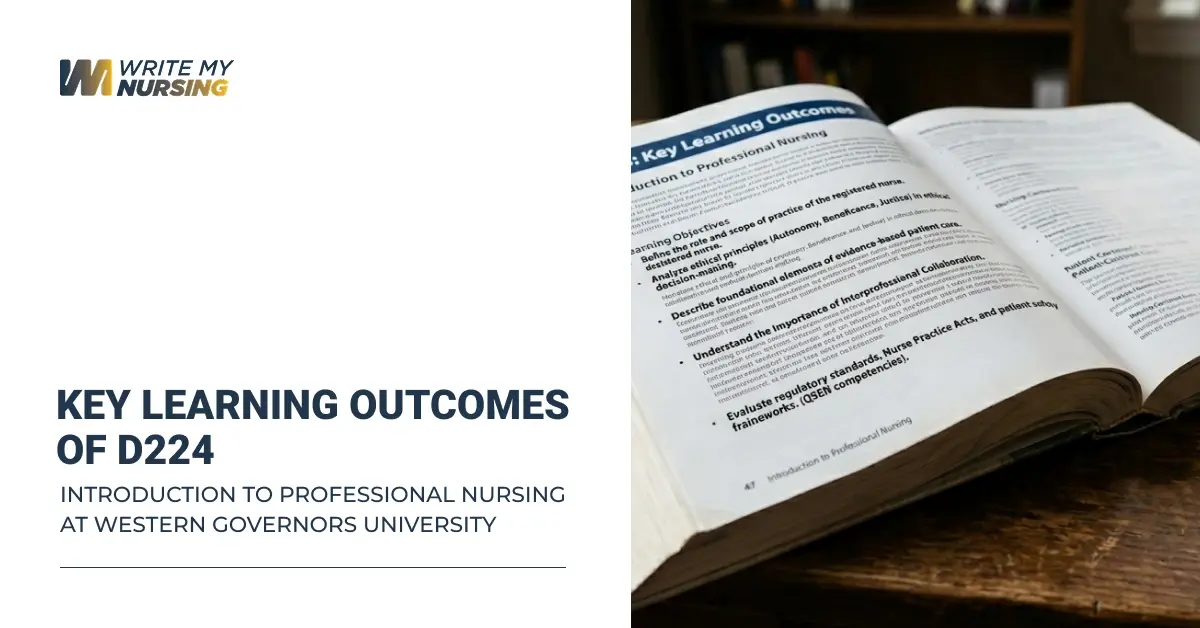
The transition into professional nursing requires more than memorizing healthcare concepts. Students must understand how nurses think, communicate, and make decisions in complex healthcare environments. The D224 Introduction to Professional Nursing course at Western Governors University helps learners build this essential foundation before advancing into more specialized nursing subjects.
Many students discover that early exposure to professional nursing principles strengthens their understanding of nursing assessment practices. These skills support academic success and prepare learners for future clinical responsibilities. Moreover, the course introduces the mindset needed for ethical decision-making, patient advocacy, and evidence-based practice. Students seeking support with challenging academic projects may later search for services such as write my nursing research paper, but strong foundational learning remains the most valuable long-term asset.
Why D224 Serves as an Early Foundation for Nursing Growth
Instead of focusing only on nursing tasks, this course introduces the thinking patterns that guide professional nursing practice. Students begin exploring how nurses contribute to patient wellbeing, healthcare quality, and coordinated care delivery. The course creates a starting point for understanding the broader impact nurses have within modern healthcare environments.
The course focuses on the broader responsibilities of nurses rather than technical procedures alone. Learners explore how nursing influences patient outcomes across various healthcare settings. Furthermore, they gain insight into professional expectations that guide daily nursing practice.
Building a Professional Nursing Identity
Professional identity forms an important part of nursing development. Students learn how values, ethics, and accountability influence healthcare decisions. This understanding helps them recognize their future responsibilities as healthcare professionals.
Professional identity also supports confidence during academic progression. Learners begin viewing themselves as future contributors to healthcare teams. Consequently, they approach coursework with greater purpose and commitment.
Understanding the Scope of Nursing Practice
Students explore the diverse roles nurses perform throughout healthcare systems. They examine responsibilities related to patient care, education, leadership, and advocacy. This broader perspective expands their understanding of the profession.
The course also highlights how nursing continues evolving alongside healthcare needs. Learners recognize the importance of lifelong learning and professional growth. Therefore, they become more adaptable to future industry changes.
Developing Strong Nursing Assessment Awareness
Patient observations often reveal details that shape the direction of care. Students learn how collecting meaningful information helps identify concerns before they become larger problems. This process encourages thoughtful decision-making rather than assumptions.
Rather than viewing assessment as a checklist, learners begin understanding its analytical purpose. They recognize how assessment findings reveal patient needs and potential health concerns. Moreover, they develop appreciation for careful data collection and interpretation.
Connecting Assessment to Clinical Judgment
Clinical judgment depends heavily on assessment accuracy. Students learn that incomplete information often leads to poor healthcare decisions. This understanding encourages attention to detail during patient evaluations.
Learners also explore how assessment findings influence care planning. They examine the relationship between observation, analysis, and intervention selection. As a result, they gain a stronger foundation for future clinical reasoning.
Recognizing the Value of Patient Information
Every patient presents unique healthcare circumstances. Students learn how physical findings, medical history, and personal experiences contribute to assessment quality. This perspective encourages individualized patient care.
The course also emphasizes effective communication during assessment activities. Learners understand that meaningful patient interactions often reveal valuable health information. Consequently, they develop greater respect for patient-centered communication.
Learning Professional Communication Skills
Effective communication remains one of the most important nursing competencies. D224 introduces communication strategies that support collaboration and patient safety. Students learn how clear communication reduces misunderstandings within healthcare environments.
Communication extends beyond verbal interactions. Learners explore documentation practices, professional language, and active listening techniques. Furthermore, they recognize how communication affects patient trust and healthcare outcomes.
Strengthening Team Collaboration
Modern healthcare depends on interdisciplinary teamwork. Students learn how nurses communicate with physicians, therapists, and other healthcare professionals. This knowledge prepares them for collaborative clinical environments.
Team collaboration also supports better patient outcomes. Learners understand how information sharing improves care coordination and decision-making. Therefore, they appreciate the importance of professional relationships.
Developing Patient-Centered Communication
Patients often experience uncertainty during healthcare encounters. Students learn techniques that promote understanding and emotional support. These communication skills help create positive healthcare experiences.
Patient-centered communication also encourages patient participation in care decisions. Learners recognize the value of respecting patient preferences and concerns. Importantly, this approach strengthens therapeutic relationships.
Understanding Evidence-Based Nursing Practice
Evidence-based practice represents a cornerstone of modern nursing. Students learn why healthcare decisions should rely on credible evidence and professional judgment. This concept introduces critical thinking skills that support future nursing coursework.
The course encourages learners to evaluate information carefully before accepting conclusions. They begin understanding how evidence influences clinical recommendations and healthcare improvements. Moreover, they recognize the importance of staying informed throughout their careers.
Building Research Awareness
Nurses encounter new information throughout their careers. For this reason, students learn how to examine evidence carefully and determine whether it supports practical healthcare decisions. This skill encourages informed thinking when evaluating different approaches to patient care.
Many advanced nursing programs require extensive scholarly work. Therefore, students benefit from early exposure to research concepts. Although academic support options exist, students benefit most when they understand how evidence contributes to nursing knowledge. Strong research awareness helps learners evaluate information independently and apply concepts with greater confidence.
Supporting Informed Decision-Making
Evidence-based practice improves decision quality across healthcare settings. Students learn how evidence contributes to safer and more effective patient care. This awareness promotes thoughtful clinical reasoning.
In addition, learners develop stronger analytical skills through evidence evaluation. They become more comfortable examining different perspectives before reaching conclusions. Consequently, they strengthen their professional judgment abilities.
Exploring Ethical and Legal Nursing Responsibilities
Ethical decision-making influences every aspect of nursing practice. D224 introduces ethical principles that guide professional conduct and patient care. Students learn how ethical considerations affect healthcare choices.
The course also explores legal responsibilities associated with nursing practice. Learners examine accountability, patient rights, and professional standards. Furthermore, they understand how ethical and legal awareness protects patients and healthcare professionals.
Applying Ethical Principles in Nursing
Professional decisions often involve competing priorities and complex situations. Students learn how thoughtful judgment supports respectful, responsible, and patient-focused actions in everyday nursing practice.
Ethical situations often involve competing priorities. Learners begin developing the ability to analyze complex circumstances thoughtfully. Therefore, they become better prepared for future clinical challenges.
Understanding Professional Accountability
Accountability remains essential within nursing practice. Students learn that healthcare decisions carry significant consequences. This understanding encourages responsibility and attention to professional standards.
Professional accountability also supports trust within healthcare environments. Learners recognize the importance of honesty, competence, and reliability. Consequently, they develop habits that contribute to professional success.
Key Competencies Developed Through D224
The course develops multiple competencies that support future nursing education and practice.
| Competency | Learning Benefit |
| Professional Communication | Improves collaboration and patient interaction |
| Nursing Assessment Awareness | Supports accurate patient evaluation |
| Ethical Decision-Making | Guides responsible nursing actions |
| Evidence Evaluation Skills | Supports informed healthcare judgment and analytical decision-making |
| Professional Identity | Encourages career readiness |
| Research Awareness | Prepares students for scholarly work |
These competencies create a strong educational foundation. Students can build upon these skills throughout their nursing journey. Moreover, each competency contributes directly to professional growth.
Preparing for Advanced Nursing Education
D224 serves as preparation for more complex nursing coursework. Students develop habits that support success in future academic challenges. They learn how foundational knowledge connects with advanced nursing concepts.
As coursework becomes more demanding, learners rely on skills developed during introductory studies. Strong communication, critical thinking, and assessment awareness continue supporting academic achievement. Therefore, early learning experiences remain valuable throughout nursing education.
Supporting Future Research Projects
Research expectations often increase as students progress academically. Learners who understand foundational research concepts adapt more easily to scholarly assignments. This preparation improves confidence during future coursework.
Advanced programs may involve extensive projects, including a thesis for nursing students. Early exposure to evidence evaluation helps students manage these requirements effectively. Consequently, they approach academic research with greater competence.
Building Confidence for Academic Success
Confidence develops through knowledge and preparation. Students who understand professional nursing concepts often feel more prepared for future challenges. This confidence encourages persistence during difficult coursework.
Furthermore, academic confidence supports stronger classroom engagement. Learners become more willing to participate in discussions and explore complex healthcare topics. As a result, their educational experience becomes more meaningful.
The Connection Between Academic Growth and Professional Development
Academic learning and professional development occur simultaneously throughout nursing education. D224 helps students understand this important relationship. They recognize that every learning experience contributes to future professional effectiveness.
Professional development involves more than technical competence. Students also strengthen communication abilities, ethical awareness, and leadership potential. Moreover, these qualities influence long-term career success.
Some learners eventually pursue advanced scholarly projects requiring thesis for nursing students support or nursing dissertation writing help. However, foundational professional competencies remain critical regardless of academic level. Strong nursing foundations often determine future academic and career achievements.
Conclusion
D224 Introduction to Professional Nursing provides essential preparation for future nursing education and practice. The course introduces professional identity, communication skills, ethical awareness, evidence-based thinking, and nursing assessment principles. These learning outcomes help students understand the responsibilities and expectations associated with modern nursing.
Moreover, the course creates a strong foundation for academic growth, clinical development, and professional success. Students gain valuable insights that support future coursework and healthcare practice. Ultimately, those who fully engage with D224 develop skills that remain relevant throughout their nursing careers.
Frequently Asked Questions
Q1. Why is nursing assessment important in D224?
Ans. Nursing assessment introduces critical thinking and patient evaluation skills needed throughout nursing education.
Q2. How does D224 support future nursing courses?
Ans. The course builds foundational knowledge that supports advanced clinical and academic learning.
Q3. Does D224 include evidence-based practice concepts?
Ans. Yes, students learn how evidence supports informed nursing decisions and professional judgment.
Q4. Why do students study professional communication in nursing?
Ans. Effective communication improves teamwork, patient safety, and healthcare outcomes.
Q5. How can D224 help with future research projects?
Ans. The course introduces research awareness that supports scholarly writing and evidence evaluation.