
Introduction
Success in modern healthcare depends on effective communication, planning, and collaboration. Every nursing assessment contributes to better patient outcomes when nurses understand individual needs and coordinate services properly. NURS FPX 4065 Patient Centered Care Coordination at Capella University helps learners develop these essential skills through practical application and critical thinking.
This course focuses on creating care plans that reflect patient preferences, cultural values, and healthcare goals. Students learn how to connect clinical knowledge with real-world care coordination practices. Moreover, they explore methods that improve continuity of care across different healthcare settings. As a result, learners gain valuable experience that supports professional growth and leadership development.
Understanding the Purpose of NURS FPX 4065
NURS FPX 4065 introduces students to the principles of patient-centered care coordination. The course emphasizes collaboration between healthcare providers, patients, families, and community resources. Therefore, students learn how coordinated efforts can improve healthcare experiences and outcomes.
Patient-centered care extends beyond treating symptoms. Nurses must understand emotional, social, cultural, and environmental factors that affect health. Consequently, the course encourages students to view healthcare through a broader perspective. This approach helps future professionals create meaningful and sustainable care strategies.
Why Care Coordination Matters
Healthcare systems often involve multiple providers and services. Patients frequently transition between hospitals, clinics, rehabilitation centers, and home care environments. Without coordination, important information can become lost during these transitions.
Effective coordination reduces confusion and supports consistent treatment plans. Moreover, it helps patients understand their responsibilities and available resources. Therefore, nurses play a vital role in ensuring seamless healthcare experiences.
Building a Patient-Centered Mindset
A patient-centered mindset focuses on individual needs rather than standardized solutions. Every patient brings unique circumstances, beliefs, and goals into healthcare encounters. Nurses must recognize these differences when developing care plans.
This perspective strengthens trust and improves communication. Furthermore, patients often become more engaged in their treatment when they feel respected and heard. As a result, healthcare outcomes frequently improve.
The Role of Nursing Assessment in Care Coordination
A comprehensive nursing assessment serves as the foundation of effective care coordination. Nurses collect information about physical health, emotional well-being, social support, and environmental conditions. This information guides clinical decisions and planning efforts.
Assessment findings help identify risks, barriers, and opportunities for improvement. Therefore, nurses can create personalized interventions that address specific patient needs. Importantly, accurate assessments support better collaboration among healthcare teams.
Identifying Individual Patient Needs
Each patient presents different healthcare challenges. Some individuals require chronic disease management, while others need support after hospitalization. Nurses use assessment data to determine the most appropriate care strategies.
This process involves careful observation and active listening. Moreover, nurses evaluate factors that may affect treatment adherence and recovery. Consequently, care plans become more realistic and effective.
Connecting Assessment Findings to Care Plans
Assessment information becomes meaningful when translated into action. Nurses analyze collected data and develop measurable goals that support patient well-being. These goals guide interventions and follow-up activities.
Effective planning also considers available resources and patient preferences. Therefore, nurses create strategies that patients can realistically follow. This personalized approach creates a stronger foundation for care delivery.
Core Skills Developed in NURS FPX 4065
The course develops several competencies that healthcare organizations value. Students learn how to assess patient needs, coordinate services, communicate effectively, and evaluate outcomes. These abilities strengthen professional practice across many healthcare settings.
Furthermore, learners develop leadership skills that support interdisciplinary collaboration. They gain confidence when addressing complex healthcare challenges. Consequently, graduates become more effective advocates for patient-centered care.
Communication and Collaboration
Successful coordination depends on clear communication. Nurses interact with physicians, therapists, social workers, caregivers, and patients. Each interaction influences the quality of care delivered.
Strong communication reduces misunderstandings and promotes teamwork. Moreover, collaborative relationships improve problem-solving and decision-making. Therefore, this skill remains essential throughout professional nursing practice.
Critical Thinking and Decision Making
Healthcare situations often involve uncertainty and complexity. Nurses must evaluate information carefully before making decisions. NURS FPX 4065 encourages analytical thinking that supports safe and effective care.
Critical thinking helps nurses prioritize interventions and anticipate challenges. Furthermore, it improves the ability to adapt care plans when circumstances change. As a result, patients receive more responsive and personalized care.
Key Components of Patient Centered Care Coordination
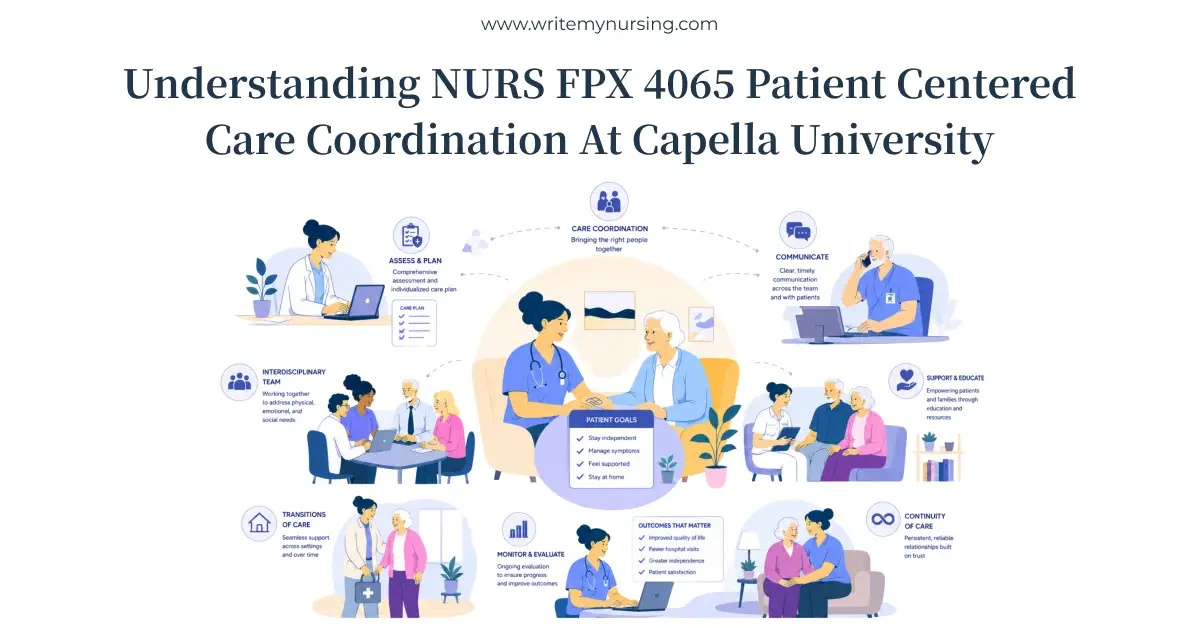
Patient-centered care coordination involves several interconnected elements. Each component contributes to a more organized and supportive healthcare experience. Understanding these elements helps students perform better throughout the course.
The following table highlights important components commonly addressed during care coordination activities.
| Care Coordination Element | Contribution to Patient Care |
| Patient Assessment | Identifies healthcare needs and priorities |
| Goal Setting | Establishes measurable outcomes |
| Communication | Supports information sharing |
| Resource Coordination | Connects patients with services |
| Follow-Up Planning | Monitors progress and outcomes |
| Patient Education | Promotes informed decision making |
These components work together to create comprehensive care plans. Moreover, they help ensure continuity across different stages of treatment.
Challenges Students Commonly Face
Many students find care coordination assignments challenging because they require both clinical knowledge and strategic planning. Learners must analyze situations from multiple perspectives while maintaining patient-centered priorities.
Complex scenarios often require detailed reasoning and evidence-based thinking. Therefore, students benefit from strong organizational skills and careful preparation. Developing these abilities takes practice and consistent effort.
Managing Complex Patient Scenarios
Patient cases frequently involve multiple health concerns. Students must consider physical, psychological, financial, and social factors simultaneously. This requirement increases the complexity of care planning.
However, structured assessment methods can simplify the process. By organizing information effectively, students can identify priorities more efficiently. Consequently, they develop stronger care coordination strategies.
Balancing Academic and Professional Responsibilities
Many nursing students work while completing their degrees. Balancing coursework, employment, and personal commitments can become difficult. Time limitations often create additional stress during assignment preparation.
As a result, some learners seek guidance for a nursing assignment when managing demanding schedules. Proper planning and early preparation often reduce these challenges. Nevertheless, academic support resources remain valuable for many students.
Strategies for Success in NURS FPX 4065
Success requires more than completing assignments. Students must understand how course concepts connect to professional nursing practice. Consistent engagement with learning materials strengthens this understanding.
Moreover, practical application improves knowledge retention. Students who actively connect theory with real healthcare situations often perform better throughout the course.
Focus on Comprehensive Assessment
A detailed nursing assessment provides the foundation for every care coordination activity. Students should gather information systematically and examine all relevant factors. Missing important details can weaken the overall care plan.
Comprehensive assessments also reveal hidden barriers to care. Therefore, students should explore patient circumstances thoroughly before developing recommendations.
Prioritize Patient Preferences
Patient-centered care requires respect for individual choices and values. Students should consider patient goals when proposing interventions and services. This approach aligns with the core principles of the course.
When patients participate in decision making, engagement often improves. Furthermore, treatment plans become more practical and sustainable. Consequently, healthcare outcomes may improve over time.
How the Course Supports Professional Growth
NURS FPX 4065 prepares students for responsibilities they will encounter throughout their careers. The course develops skills that apply across hospitals, clinics, community programs, and home health settings.
Healthcare organizations increasingly value professionals who understand care coordination. Therefore, the competencies gained in this course support long-term career advancement. Students become better equipped to address evolving healthcare needs.
Strengthening Leadership Abilities
Leadership involves more than managing teams. Nurses demonstrate leadership when they advocate for patients and coordinate services effectively. This course encourages those professional behaviors.
Students learn to connect healthcare teams, resources, and patient goals through strategic planning efforts. Moreover, they develop confidence when addressing complex healthcare challenges. These qualities support future leadership opportunities.
Preparing for Real World Healthcare Practice
The healthcare environment continues to evolve rapidly. Patients often require coordinated support from multiple providers and services. Nurses must navigate these complexities while maintaining quality care.
NURS FPX 4065 provides practical experiences that mirror real clinical situations. Consequently, students develop skills that remain relevant beyond graduation. This preparation enhances readiness for professional practice.
Support Options for Nursing Students
Academic success often requires access to reliable support systems. Students benefit from instructor feedback, peer collaboration, and structured study habits. These resources strengthen learning outcomes and confidence.
Some learners also explore assistance when facing difficult coursework requirements. For example, students may search for guidance using phrases such as write my nursing assignment or do my nursing assignment when deadlines become challenging. However, meaningful learning occurs when students actively engage with the material and develop their own understanding.
Using Feedback Effectively
Constructive feedback helps students identify strengths and improvement areas. Reviewing comments carefully can enhance future performance. Therefore, learners should view feedback as an opportunity for growth.
Consistent improvement often results from applying feedback to subsequent assignments. Moreover, this practice strengthens critical thinking and professional development.
Developing Long Term Learning Habits
Strong learning habits support success throughout nursing education. Regular study schedules, organized notes, and active participation improve comprehension. These practices also reduce stress during assignment preparation.
Importantly, long-term habits create a foundation for lifelong learning. Healthcare professionals must continue developing knowledge throughout their careers. Therefore, these habits provide lasting value.
Conclusion
NURS FPX 4065 Patient Centered Care Coordination at Capella University helps students develop essential skills for modern healthcare practice. The course emphasizes collaboration, communication, planning, and patient advocacy. Moreover, it demonstrates how a thorough nursing assessment supports effective care coordination and improved patient outcomes.
Students who master these concepts become stronger healthcare professionals. They learn how to address complex patient needs while respecting individual preferences and goals. Ultimately, the knowledge gained in this course supports academic success, professional growth, and high-quality patient-centered care.
Frequently Asked Questions
Q1. What is the main focus of NURS FPX 4065?
Ans. The course focuses on patient-centered care coordination, communication, and planning strategies that improve healthcare outcomes.
Q2. Why is a nursing assessment important in care coordination?
Ans. A nursing assessment identifies patient needs and guides personalized care planning decisions.
Q3. What skills do students develop in NURS FPX 4065?
Ans. Students develop communication, collaboration, critical thinking, leadership, and care coordination skills.
Q4. How does patient-centered care improve outcomes?
Ans. It increases patient engagement, supports informed decisions, and strengthens treatment adherence.
Q5. Why do students seek help with a nursing assignment?
Ans. Students often seek guidance when managing complex coursework, professional duties, and academic deadlines.